
The Love Triangle Layout
Difficulty: Complicated
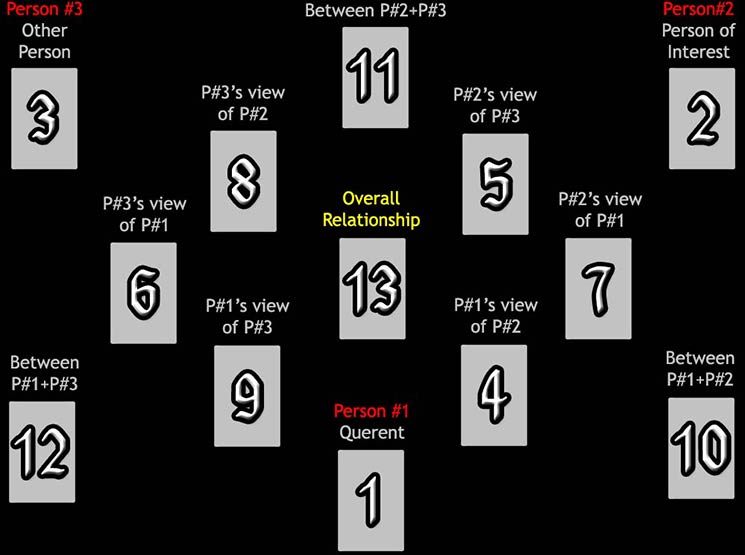
Casually referred to as the Love Triangle, this spread can be used to determine the dynamics of the relationship between three people, regardless of whether romance is involved. This spread is arranged in the form of a hexagram, consisting of several large and small triangles. This layout may seem somewhat complicated, but it is not entirely that difficult.
The first step is to interpret the tile for each individual position in the spread. Generally, one might ask about a relationship they are involved in, but this does not have to be the case. Ordinarily, the reader's representative tile is #1, their main person of interest is #2, and the other person would be #3.
The second step fills in the downward triangle and involves further examination of the individuals through their views of the other people. Each person has two more tiles showing the way they see and relate to the other members of the triangle. For example, Tile #6 indicates how Person #3 relates to Person #1, while Tile #9 stands for Person #1's attitude toward Person #3.
The next step completes the upward triangle and the hexagram, focusing on tiles #10–13. It also completes the many smaller triangles and hints at the potential for each relationship. The final tile, #13 can be considered the significator of the reading, which suggests the overall potential for this three-way relationship.
Your Love Triangle Reading
| P#3 | 3to2 | 2+3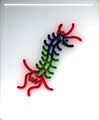 |
2to3 | P#2 | ||
 |
3to1 | 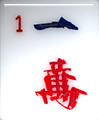 |
Overall | 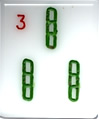 |
2to1 | 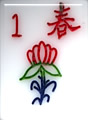 |
| 1+3 | 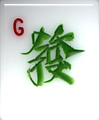 |
1to3 | 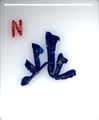 |
1to2 | 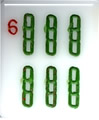 |
1+2 |
 |
 |
P#1 | 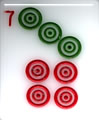 |
 |
||
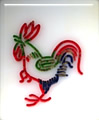 |
1: Person #1
The Rooster symbolises punctuality, discipline, and the promise of new beginnings. It stands for communication and the commitment to rising early, establishing order in your daily life. This tile embodies self-reliance and the drive to assert your presence in the world, ensuring that every new day is approached with determination. The Rooster's crow is not just a call to awaken; it signifies the importance of marking time and seizing opportunities as they emerge. It champions responsibility and the readiness to defend one's personal space, encouraging you to face challenges. The Rooster teaches that consistency, vigilance, and proactive engagement create the groundwork for enduring success.
2: Person #2
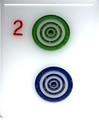
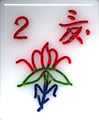
The Plum Blossom is a symbol of resilience, purity, and the resolve to endure hardship. Blooming in the cold of winter, it thrives where other flowers wither, representing perseverance through life's harshest trials. This tile suggests that even in difficult times, there is beauty to be found, and endurance will ultimately lead to renewal. The Plum Blossom also speaks to inner fortitude—your ability to withstand adversity with grace and dignity. Challenges may persist, but just as winter gives way to spring, your current struggles will lead to a period of flourishing. It encourages patience, reminding you that the most valuable growth often occurs in times of hardship.
3: Person #3
The Pine Tree tile embodies steadfast strength, resilience, and mature resolve. It represents a powerful, determined individual—often a person of diplomatic skill—whose unwavering principles guide them through adversity. This tile speaks of enduring character, suggesting that success comes not from impulsive action but through planning, persistence, and accumulating wisdom. It encourages a balanced approach to life: fusing fortitude with measured patience and strategic foresight. The Pine Tree calls upon you to root yourself in your values, nurture your ambitions consistently, and let your steady progress be the foundation upon which lasting achievements are built.
4: Person #1's view of #2
The Insect tile represents a surge of rapid, energetic activity that delivers quick, albeit transient, successes. It emphasises the potential for short bursts of inspiration and effort that can lead to immediate gains, but it also serves as a reminder that these victories are temporary. This tile underscores the importance of recognising that rapid action can act as a catalyst—a bridge—towards establishing more enduring achievements. It invites you to harness these moments of heightened energy to spark initial progress, while also urging you to develop strategies that convert these brief surges into a stable, long-term foundation. The Insect teaches that while adrenaline-fuelled initiatives can provide a vital boost, lasting growth depends on careful planning and deliberate, sustained effort once the initial momentum has been captured. Use these episodes as signals to seize opportunity, then transition to more measured actions that secure lasting benefits.
5: Person #2's view of #3
The Toad represents resilience through hardship, resourcefulness, and the rewards of patience. Its presence suggests a time of struggle or slow progress, but also the wisdom gained from perseverance. The Toad is often associated with wealth and protection in folklore, signifying hidden treasures that will only be revealed through hard work and dedication. Ambition may be high, but it warns against reaching beyond one's means without preparation. This tile urges patience—difficulties will pass, leaving you stronger and more grounded in your pursuits. Look beyond surface-level frustrations to recognise deeper opportunities for learning and growth.
6: Person #3's view of #1
The Green Dragon symbolises the dawn of new endeavours, marking the threshold where old cycles conclude and fresh opportunities arise. It carries the energy of renewal, signalling that the time has come for a journey of transformation. In traditional lore, the Green Dragon is revered as the spirit of regeneration—its vibrant colour reflecting growth, healing, and the boundless potential of nature. It inspires a proactive embrace of change, encouraging you to initiate projects, relationships, or personal transformations with conviction and optimism. The Green Dragon's influence is subtle yet potent, urging you to trust the natural progression of events and to take that first step towards a future filled with promise.
7: Person #2's view of #1
Water is the essence of flow, adaptability, and emotional expression. It represents the necessity of change and movement, encouraging flexibility in both thought and action. This tile suggests that a journey—physical, emotional, or metaphorical—may be necessary to resolve lingering issues or clear stagnation from your life. Water also governs communication, making this a time when honest and open dialogue is critical. Misunderstandings could arise if emotions are suppressed, so transparency is key. Like a river carving its way through stone, persistence in seeking truth will eventually overcome any obstacles in your path.
8: Person #3's view of #2
The Entering tile signals the imminent removal of barriers that have confined you, ushering in a period when hidden opportunities become accessible. This tile speaks to the moment of transition when your efforts align with new gateways to success. It demands courage and readiness—entering uncharted territory with both determination and mindfulness. The energy of this tile implies that personal and professional doors, once firmly shut, are now opening. Embrace this moment as an invitation to move forward; however, the transition requires that you leave behind outdated practices and step into roles that foster growth. The Entering tile, thus, is both a call to action and a herald of transformation, underscoring that the rewards for seizing these new opportunities are worth the effort of change.
9: Person #1's view of #3
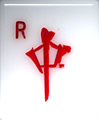
The Red Dragon is the embodiment of vibrant energy, success, and the fulfilment of destiny. It radiates warmth and vitality, symbolising the core drive that propels you towards achievement. In esoteric terms, the Red Dragon is not merely a sign of ambition but also a reminder to balance passion with moderation. Its fiery hue and central position reflect both the life force and the transformative power within, urging you to harness your inner courage to overcome challenges. As a harbinger of favourable outcomes, the Red Dragon warns against reckless pursuits, insisting that success arises from a harmonious integration of heart and mind. Its presence in a reading signals that your goals are within reach, provided you maintain clarity and determination amid the ebb and flow of life's challenges.
10: Overall relationship between persons #1 and #2
The Unicorn stands as an emblem of visionary insight, intuitive clarity, and the rare capacity to discern truths that lie beneath surface appearances. This tile conveys an ethereal quality, suggesting that you have a vision capable of revealing hidden patterns and underlying realities in both people and situations. It encourages you to trust in your intuitive gifts and cultivate a perception beyond conventional sight. The Unicorn's energy is one of subtle yet profound revelation—it implies that unique perspectives and psychic sensitivity can open doors to understanding that others may overlook. The Unicorn not only points to the presence of extraordinary insight within yourself but may also hint at the influence of a person with rare intuitive abilities who can guide you through complex circumstances. This tile reminds you that clarity arises when you combine rational analysis with a willingness to explore the mystical dimensions of experience.
11: Overall relationship between persons #2 and #3
The Worm epitomises regenerative energy, transformation, and the power hidden within seemingly insignificant beginnings. It represents the natural process of decay and renewal, where overlooked resources are converted into the nourishment required for growth. This tile speaks to the strength found in humility and persistence, reminding you that progress starts from the smallest seed of effort. The Worm's influence encourages you to see potential in neglected areas and initiate healing processes in both personal and professional realms. It emphasises the importance of continual self-improvement and the subtle shifts that lead to long-term change. By embracing the cycle of decay and rebirth, you learn to transform setbacks into stepping stones, harnessing the power of incremental progress to cultivate lasting results. The worm is an old Tibetan home remedy with tremendous healing properties, and it represents a powerful cure-all.
12: Overall relationship between persons #1 and #3
The Orchid is a symbol of elegance, integrity, and higher wisdom. It represents the pursuit of personal and spiritual elevation, urging you to rise above mundane distractions and embrace a more enlightened path. The Orchid is associated with those who dedicate themselves to knowledge and self-improvement. This tile suggests a time of refinement—whether in personal relationships, intellectual pursuits, or spiritual development. You are being called to cultivate grace, dignity, and a deeper understanding of the world around you. The Orchid also signifies that beauty and wisdom come from patience and cultivation, not force or haste.
13: Overall 3-way Relationship
The North Wind embodies the relentless, often tumultuous qualities of Water, signalling periods of emotional challenge and uncertainty. This tile suggests that the road ahead may be marked by deep, transformative trials—where turbulent emotions and shifting circumstances test your adaptability. Water's fluidity represents both the potential for cleansing renewal and the risk of overwhelming currents. It advises you to remain vigilant and adaptive, using intuition and flexibility to navigate through the complexities that arise. In essence, the North Wind is a call to harness inner strength and resilience, allowing the natural ebb and flow of life's challenges to eventually lead to personal growth and renewal.