
Relationship Layout #1
Difficulty: Easy
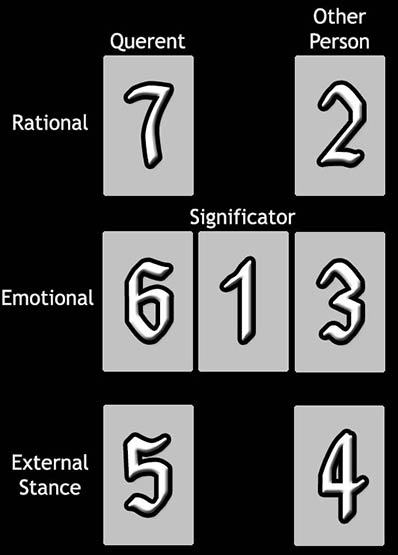
This layout is easy to read, like a convenient chart. In this layout, court oghams generally indicate actual people with the same characteristics. Knights (or corresponding princes, but not kings) and queens are meant to represent actual men and women in this layout. Look for patterns in the oghams as always.
Ogham #1 is the overall significator of the relationship. The two columns on either side of the significator characterise each individual's role in the relationship. The relationship does not have to be romantic. In fact, it could be a relationship between a person and a group, or even how two groups relate.
The top row, oghams #7 & #2, is about the conscious thoughts of each person, or what they think about the relationship and likewise how they view their partner.
The middle row, oghams #6 & #3, reveals the way each individual feels about the other. Emotional awareness corresponds to a person's unconscious thoughts that run deep, affecting a person in ways he or she is not fully aware of.
The bottom row, oghams #5 & #4, represents the way each person behaves, in other words the stance taken regarding the relationship. The way a person acts may be genuine, but sometimes people are phony and manipulative, so it is best to weigh this ogham against the other person's oghams to determine how they match up.
Your Relationship #1 Reading
| You | Other Person | ||
| Thought | 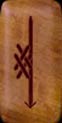 Iphin Blocked |
 Ur Blocked |
|
| Emotion | 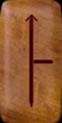 Beith |
The Significator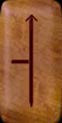 Huathe |
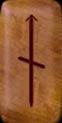 Muin |
| External Stance | 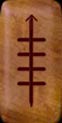 Eadha |
 Ailm Blocked |
The Significator
Huathe
- Tree/Plant: Hawthorn
- Kenning: ‘Thorn of Protection’
- Spiritual Lesson: True protection is conscious, not reactionary.
- Reflective Question: What am I defending, and is it truly sacred?
- Affirmation: ‘I protect without imprisoning.’
The Querent's Thoughts
Iphin Blocked
- Tree/Plant: Gooseberry
- Kenning: ‘The Tang of Life’
- Spiritual Lesson: Life stings—but it stings to wake you.
- Reflective Question: What bitterness must I bless so it can become my medicine?
- Affirmation: ‘I rise refreshed from the bite of truth.’
The Other Person's Thoughts
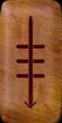
Ur Blocked
- Tree/Plant: Heather
- Kenning: ‘Flower of Dreams’
- Spiritual Lesson: Dreams demand roots as much as wings.
- Reflective Question: What fragile dream do I need to protect and nourish?
- Affirmation: ‘I dream with rooted hope.’
The Querent's Emotions
Beith
- Tree/Plant: Birch
- Kenning: ‘Brightest of Trees’
- Spiritual Lesson: Purification requires surrender; beginnings require mourning.
- Reflective Question: What old story must I finally lay to rest to allow my rebirth?
- Affirmation: ‘I welcome the purity of the unknown.’
The Other Person's Emotions
Muin
- Tree/Plant: Vine
- Kenning: ‘Binding of Intoxication’
- Spiritual Lesson: True connection uplifts; false ties consume.
- Reflective Question: Where am I entangled in illusion?
- Affirmation: ‘I choose sacred union, not bondage.’
The Querent's External Stance
Eadha
- Tree/Plant: Aspen
- Kenning: ‘Shield of Courage’
- Spiritual Lesson: Courage is trembling action.
- Reflective Question: What fear am I called to face and outgrow?
- Affirmation: ‘I tremble, but I move.’
The Other Person's External Stance
Ailm Blocked
- Tree/Plant: Silver Fir
- Kenning: ‘Pillar of Resilience’
- Spiritual Lesson: True resilience bends without breaking.
- Reflective Question: What inner root keeps me alive through winter?
- Affirmation: ‘I endure, evergreen and steadfast.’