
The Golden Dawn or Thoth Method
Difficulty: Complicated
Note: Tarot decks that use reversed cards such as the Rider-Waite do not work well with this spread, which was designed to be read using elemental dignity.
The Golden Dawn spread is best suited for use with the bifrost Tarot and especially the Book of Thoth, as these decks are meant to be read a certain way with the court cards. Princes and queens represent actual men and women connected with the matter, while princesses generally represent ideas; thoughts or opinions, and knights represent arrival or departure of a matter depending on the direction faced.
In this tarot spread, particular attention should be paid to a card's exact position in relation to its neighbours. Whether the neighbour cards bear the same energy (suit) determines whether a card is considered well-dignified or ill-dignified. Opposite suits ill-dignify each other, while other suits are considered friendly. Tarot cards of the same suit or element strengthen each other.
As with other tarot spreads, it is important to count the cards' tendencies, such as whether there is a lot of one particular suit or number pattern. The patterns reveal special messages. Having several majors present indicates higher forces at work, several cups suggest strong emotions, etc.
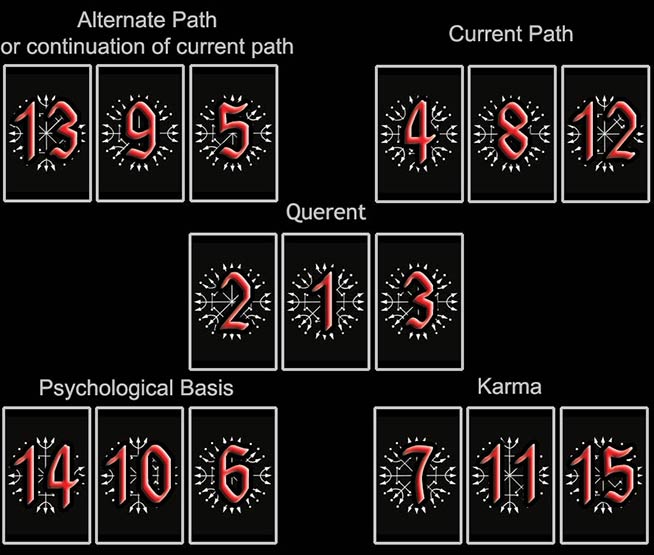
Card #1 represents the reader and the nature of the topic at hand.
Cards #2 & #3 are read in extension of #1 to further comprehend the nature of the topic.
The two sets of three tarot cards at the top of the spread represent chronological sets of events. The current path as it would unfold naturally is represented by cards #4, #8, & #12. The alternate path that could be taken is represented by cards #13, #9, & #5. However, if the reader gets the feeling these cards are telling them they go together, then the alternate path is to be considered an extension of the current path, and to be read chronologically in this order: #4, #8, #12, #13, #9, #5. Just keep in mind: this is only if the two paths seem particularly similar.
Cards #14, #10, & #6 shed light upon the psychological undertones of the current issue.
Cards #7, #11, & #15 represent the influences of karma and destiny beyond the reader's control. These cards suggest adapting to this, as fate.
Your Golden Dawn Reading
| The Alternate Path (or Extension of Current Path) |
Your Current Path |
|||||
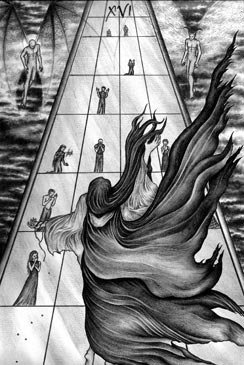 The Tower |
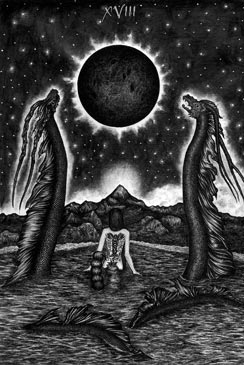 The Moon |
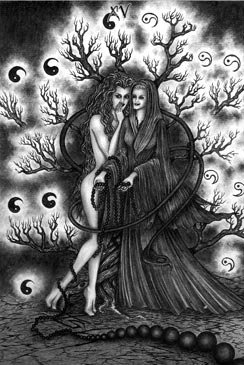 The Devil |
 The Charioteer |
 The Empress |
 The Hanged One |
|
| The Querent | ||||||
 The Magician |
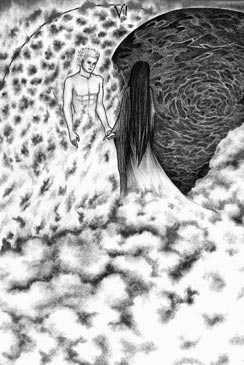 The Lovers |
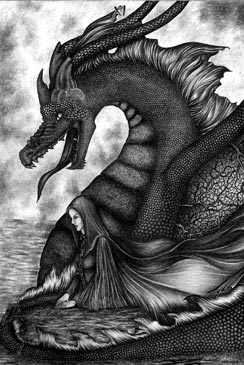 Strength |
||||
| The Psychological Basis | Karma | |||||
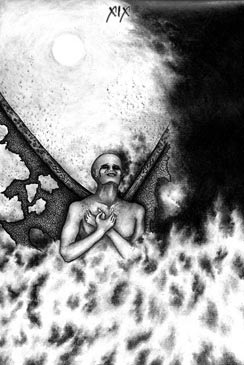 The Sun |
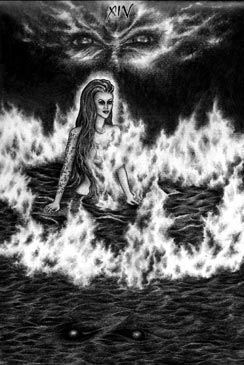 Temperance |
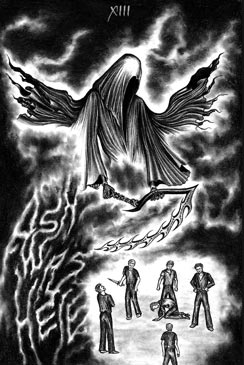 Death |
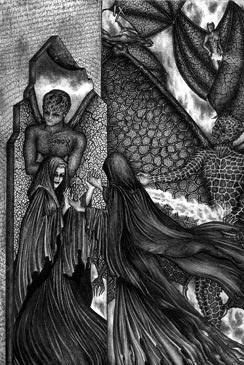 The Hermit |
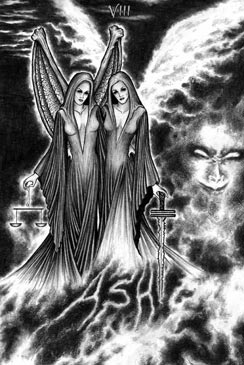 Duality |
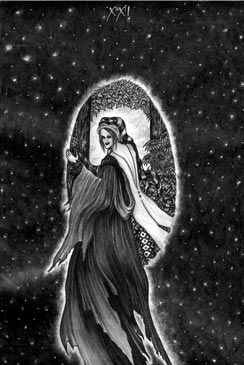 The World |
|
The Querent
cards represent the querent and the nature of the topic at hand. The first card (in the center of the spread) represents the very core of the matter, and the other two cards around it are added to it in order to further comprehend the nature of the topic.
The Lovers card is a stage related to choice and decision-making. It represents how people of influence in our lives effect our choices, thus, it is a card that is also related to interpersonal relationships.
As the seeker, The Lovers card indicates a pivotal stage where the Seeker is faced with options but the challenge lies not in making the "Right" or "Wrong" decision. Rather is a reminder that the easy way out may not necessarily lead to a long-term solution.
As a situation, The Lovers card suggests weighing options not for hedonistic gain but long-term consequences.
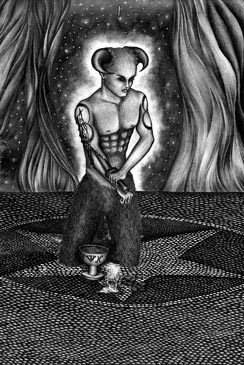
The Magician card indicates an initiation; it is a beginning in the process of creation. The tools are laid out; The Magician is not lacking in skill but in experience thus, the method used may be questionable. It is a stage of self-mastery and success will depend on how The Magician utilises both skill and tools laid out before him.
In a situation, The Magician card suggests a stage of active involvement and the need to evaluate options before making decisions.
The Strength card may suggest imposing one's will upon another whether intentional or not. It is a stage where we learn that true strength lies not in our ability to control what is in our external reality; rather it is about enduring hardships with grace and maintaining compassion.
The seeker as Strength advises us to explore aspects within that drives us to manipulate, control or influence people or situations without consideration. It may be an indication for us to realise that true strength lies not in exerting our will through force.
The situation as Strength may suggest a stage to evaluate the circumstances with objectivity. To maintain our position without compromise; if we perceive retreat as a weakness instead of strength.
Your Current Path
cards represent your current path as it would unfold naturally. These cards are read in chronological order from left to right.
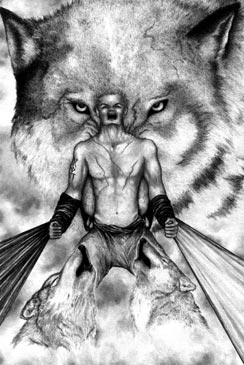
The Charioteer represents a stage of seeking autonomy, self-identity, direction. It is the representation of one's quest in seeking or gaining control; it is also a reminder of how easy everything can become undone.
As the Seeker, The Charioteer suggests a time of trying to control external influences or of losing control completely. It is time to seek a balanced approach.
As a Situation, The Charioteer card suggests a stage of learning how to deal with external influences by gaining control over one's actions.
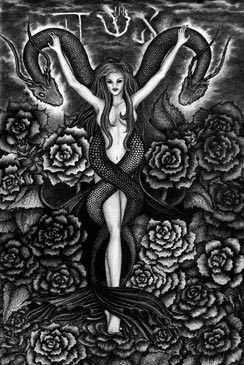
The Empress card suggests a stage of gestation; it is defined by how one develops providence into something more. If an opportunity presents itself, this card represents the need find the balance between knowing when to foster growth and when to let go.
As the Seeker, this card represents the reality that too much attention stifles development, too little and it verges on neglect.
In a situation, The Empress card is a reminder that opportunities are abundant, it's what we do with them that determines success or failure.
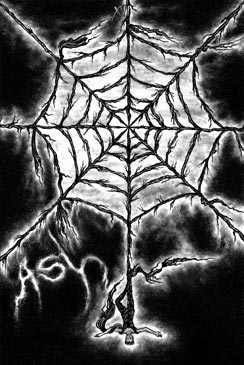
This Hanged One is suspended in limbo but it is not a decision that is made in haste. This card suggests a stage where decisions are made based on unconditional sacrifice; without expectations of anything in return.
The seeker as The Hanged One may allow us to make choices that require some form of sacrifice; but they are made without conditions attached thus, it is an opportunity for growth and maturity.
The situation as The Hanged One suggests not making decisions in haste. If the outcome of any given situation depends on choices that we make; we may wish to reflect on how our contributions can and will influence the circumstances before making a move.
The Alternate Path
cards represent the alternate path that you could choose to take in lieu of the Current Path. However, if the cards that come up seem to indicate that they go along with the Current Path, these three cards should be interpretted not as an Alternate Path, but as a chronological extension of the Current Path (also read from left to right).
Is it be better to hold on to a lie because it gives us hope;
or is it be better to know a truth that throws us off the edge of deception into the abyss below?
Jahanam is where dreams are woven; this is where cats learn to fly and birds carry swords;
this is where the Lady Moonshine hides the face of the Sun God
so that we may see the truths hidden in the dark and drive ourselves insane.
The Devil is a whisper that comes from the depths of our heart; for what is temptation but a weakness most exploited by our desire.
As the seeker, The Devil suggests an attachment that has become unhealthy; therefore, we may need to explore what it is we have bound ourselves to and what that object of our desire represents to us before we are able to free ourselves from it.
As a situation, The Devil card advices us to be aware of becoming too involved; to the extent we are unable to perceive the situation clearly. As such, we may need to ask ourselves if decisions made are based on instant gratification or out of necessity.
The Psychological Basis
cards shed light upon the psychological undertones of the current problem.
Light gives clarity; from darkness we seek out the light and if it burns;
if it turns us to dust under the harshness of its glare,
that is the ultimate liberation for enlightenment frees the soul from its earthly bondage.
Temperance demonstrates the ability to maintain equilibrium between opposing elements; she is the bridge between extremes.
The Seeker as Temperance suggests a path of moderation; seeking internal balance before one is ready to face external challenges. This card may indicate the need to resolve conflicting aspects within ourselves before we are able to restore peace into our environment.
As a situation, this card indicates a stage of mediating between opposing views; finding the middle ground to facilitate progress; restoring order in a disruptive environment. As such, we may need to explore options that allow amicable solutions to present themselves rather than allow one or the other extreme to take over.
There will come a time when all things end; a death that leaves one gasping for hope; fighting to cling on; afraid to let go. There will come a time when dreams of happy endings are rudely awakened by reality; wisps of wishful thinking disappearing into smoke; gone without a trace. There will come a time when the human heart breaks under such punishment; giving way to grief; dying bit by bit until it beats no more.
As a seeker, this card suggests a stage where one needs to learn to accept death as part of a natural cycle of life; deal with processes of letting things go; the need to move on.
As a situation, this card denotes an ending; thus, we may need to ask ourselves if holding on to something or someone may be detrimental to our growth. The time to let go will come when we acknowledge the need to do so.
Karma
These cards represent the influences of karma and destiny that are beyond your control. They suggest adapting to this fate.
The Hermit card indicates a time of self-reflection or self-imposed solitude. It is a stage when we sense the need to explore how we view the world or relate to situations and people around us.
As the person, The Hermit card suggests a need for serenity; withdrawal from external conflicts to evaluate our beliefs, priorities or principles.
As a situation, The Hermit card suggests an objective exploration of all feasible options that may lead to the most desirable resolution within a conflict.
Duality (traditionally known as Justice) is the card that represents cause and effect. Taking responsibility is not about assigning blame or surrendering to consequences blindly; rather it is about owning up to the circumstances we have helped create for ourselves.
Duality as an individual in a reading reminds us to weigh the severity of our actions carefully for every choice that we face and subsequent decision that we make sets the wheel in motion.
Duality as a situation may indicate the need to remain objective and impartial in assessing options that are open to the individual. Sometimes, clarity of thought cuts through confusion where emotions cloud the judgement.
From the Fool, we have come a full circle. What is there left to do but start over?
With a song in her heart and a prayer upon her lips, she steps out of the abyss into the World.