
Path Spread
Difficulty: Easy
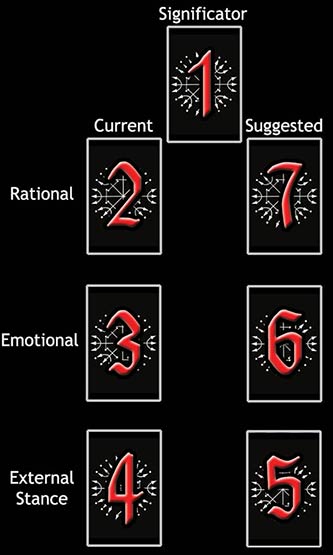
For the Path reading, one asks for suggestions how to behave properly to achieve a desired result. The Current column represents how the reader has been acting, and the Suggestedcolumn suggests how they should act to achieve a certain goal. The chart-like spread uses the standard three levels: Rational, Emotional, and External Stance (how one projects oneself outwardly). When comparing the Current and Suggested cards, the most important thing is to notice the differences between the two cards. It is these differences which hint at the behaviours that should be altered.
Card #1 is the significator, the card which should reflect the nature of the query and/or the desired outcome.
Card #2 shows the way the reader is and has been thinking. Card #7 suggests how to change the way one thinks to serve themselves better.
Card #3 suggests the reader's emotional attitude. Though it may seem difficult to manipulate one's own emotions, it can be done if one puts their mind to it. For example, acting a certain way such as smiling intently for a few minutes will lead the emotions to follow. When a person tries this, as silly as the exercise seems, they find this to evoke the emotion of happiness. For this reading, one should try to make themselves feel the way that Card #6 suggests.
External Stance means how one acts outwardly, how they hope others see them. Card #4 is about how the reader has been acting, while #5 indicates how they should act outwardly, for other people's sake. It is the differences between these cards that hint at what behaviour patterns should be altered.
Your Path Reading
| Current | The Significator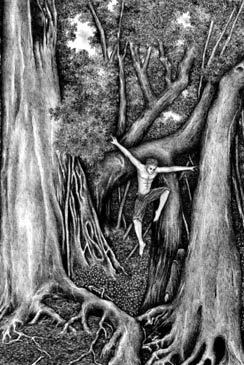 The Fool |
Suggested | |
| Thought | 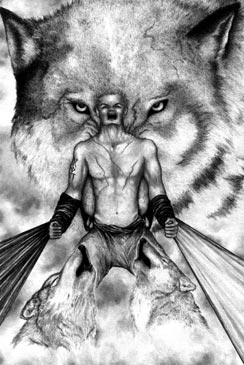 The Charioteer |
 The Lovers |
|
| Emotion | 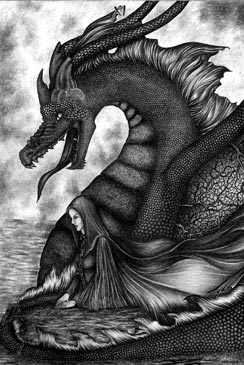 Strength |
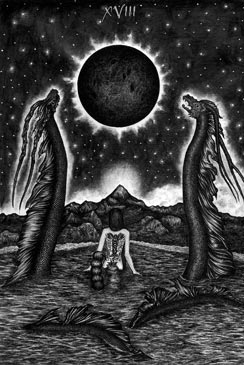 The Moon |
|
| External Stance | 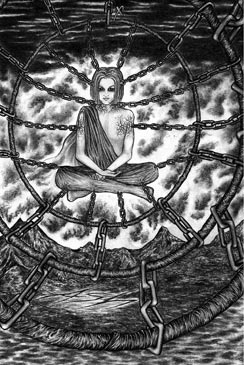 Imprisoned Instincts |
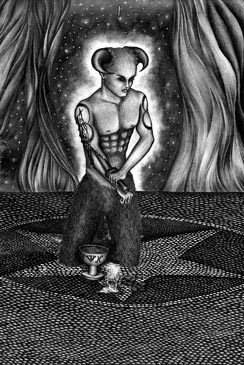 The Magician |
The Significator
The Fool
The Fool starts on a journey naive of what to expect, there will be unanticipated surprises. Not one to conform to social norms, The Fool may need to adapt to what lies ahead as the outcome will be unpredictable.
Expect the unexpected; the situation as The Fool indicates that the outcome may not turn out as planned.
Current Thoughts
The Charioteer
The Charioteer represents a stage of seeking autonomy, self-identity, direction. It is the representation of one's quest in seeking or gaining control; it is also a reminder of how easy everything can become undone.
As the Seeker, The Charioteer suggests a time of trying to control external influences or of losing control completely. It is time to seek a balanced approach.
As a Situation, The Charioteer card suggests a stage of learning how to deal with external influences by gaining control over one's actions.
Suggested Thoughts
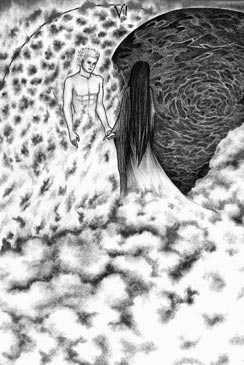
The Lovers
The Lovers card is a stage related to choice and decision-making. It represents how people of influence in our lives effect our choices, thus, it is a card that is also related to interpersonal relationships.
As the seeker, The Lovers card indicates a pivotal stage where the Seeker is faced with options but the challenge lies not in making the "Right" or "Wrong" decision. Rather is a reminder that the easy way out may not necessarily lead to a long-term solution.
As a situation, The Lovers card suggests weighing options not for hedonistic gain but long-term consequences.
Current Emotions
Strength
The Strength card may suggest imposing one's will upon another whether intentional or not. It is a stage where we learn that true strength lies not in our ability to control what is in our external reality; rather it is about enduring hardships with grace and maintaining compassion.
The seeker as Strength advises us to explore aspects within that drives us to manipulate, control or influence people or situations without consideration. It may be an indication for us to realise that true strength lies not in exerting our will through force.
The situation as Strength may suggest a stage to evaluate the circumstances with objectivity. To maintain our position without compromise; if we perceive retreat as a weakness instead of strength.
Suggested Emotions
The Moon
Jahanam is where dreams are woven; this is where cats learn to fly and birds carry swords;
this is where the Lady Moonshine hides the face of the Sun God
so that we may see the truths hidden in the dark and drive ourselves insane.
Current External Stance
Imprisoned Instincts
Imprisoned Instincts is traditionally known as the Wheel of Fortune card in tarot. While it denotes sudden change for better or worse, nothing in life happens overnight. Sometimes, we are aware of signs of change and address them or we may overlook them and pay for consequences later.
As the seeker, this card indicates that methods of coping to circumstance surrounding us contribute to what happens in the future. Thus, taking responsibility for decisions we make empower us to create the future we wish for ourselves. Taking action is a choice; doing nothing to change our circumstances is also a choice.
As a situation, Imprisoned Instincts suggest a change and while the circumstances may be out of our control but how we deal with what happened/happens is. Perhaps it is time to assess at personal methods of coping and not the event itself.
Suggested External Stance
The Magician
The Magician card indicates an initiation; it is a beginning in the process of creation. The tools are laid out; The Magician is not lacking in skill but in experience thus, the method used may be questionable. It is a stage of self-mastery and success will depend on how The Magician utilises both skill and tools laid out before him.
In a situation, The Magician card suggests a stage of active involvement and the need to evaluate options before making decisions.