
Game Plan Spread
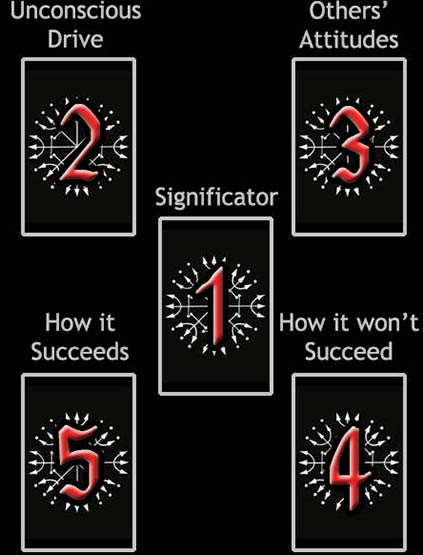
Difficulty: Easy
When a person has a certain plan in mind, this simple five-card spread presents a choice, hinting at what action or attitude should be taken for their plan to succeed, and what should be avoided to help the plan work out for the best.
The initial card is laid in the centre of the layout, the significator. The following four cards are laid out clockwise around the significator.
In this spread, the second card is about what drives the reader, but also says they are not fully conscious of this, perhaps even completely unaware of it. It provides a hint as to the reason they strive for their goal.
The third card uncovers what others think of the reader and their goals. The reader may or may not be aware of this. Sometimes other people factor into the plans (and sometimes they don't).
The fourth card suggests what not to do. If things are permitted to go down this path, the plan will collapse.
The fifth card is a hint as to how to make this plan work out favourably. The idea this card presents should be followed to make the plan successful. It is the differences between Cards #4 & #5 that should be noted, as the differences provide important clues.
Your Game Plan Reading
Unconscious Drive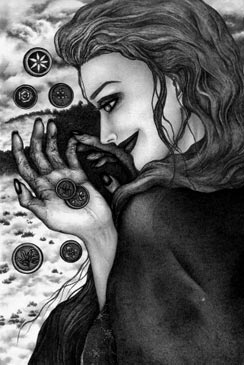 7 of Diamonds |
External Influences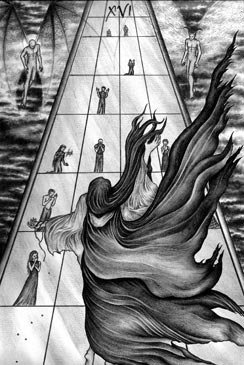 The Tower |
|
Significator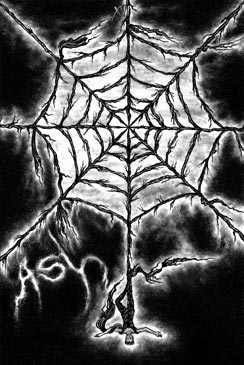 The Hanged One |
||
How it Will Succeed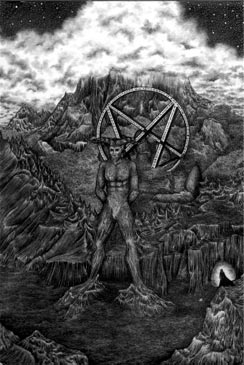 King of Diamonds |
How it Will Not Succeed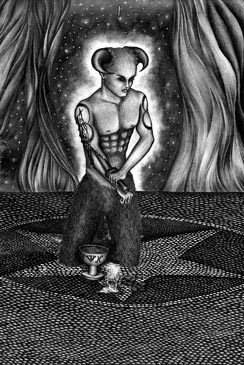 The Magician |
The Hanged One
This Hanged One is suspended in limbo but it is not a decision that is made in haste. This card suggests a stage where decisions are made based on unconditional sacrifice; without expectations of anything in return.
The seeker as The Hanged One may allow us to make choices that require some form of sacrifice; but they are made without conditions attached thus, it is an opportunity for growth and maturity.
The situation as The Hanged One suggests not making decisions in haste. If the outcome of any given situation depends on choices that we make; we may wish to reflect on how our contributions can and will influence the circumstances before making a move.
7 of Diamonds
Paying attention to the finer detail or to what is actually present as opposed to what could be. Taking ownership of only what is needed, allowing excess or clutter fall to the way side. Possibility of lost opportunities due to too narrow of a focus on what is already present. Being happy and content with what you have, not wanting to chase anything that is not needed or necessary at this time.
The Tower
Is it be better to hold on to a lie because it gives us hope;
or is it be better to know a truth that throws us off the edge of deception into the abyss below?
The Magician
The Magician card indicates an initiation; it is a beginning in the process of creation. The tools are laid out; The Magician is not lacking in skill but in experience thus, the method used may be questionable. It is a stage of self-mastery and success will depend on how The Magician utilises both skill and tools laid out before him.
In a situation, The Magician card suggests a stage of active involvement and the need to evaluate options before making decisions.
King of Diamonds
Making do with what you have at hand. Growing or cultivating for yourself, lessening the burden on others to provide for you. Create a sense of discipline and order with everything being in its appropriate place. Keeping of a level head, or having your feet on the ground when considering what is important in life. This could indicate a person who is very good regulating their financial or material life, identifying with and working with any fluctuations around them.