
Relationship Spread #2
Difficulty: Easy
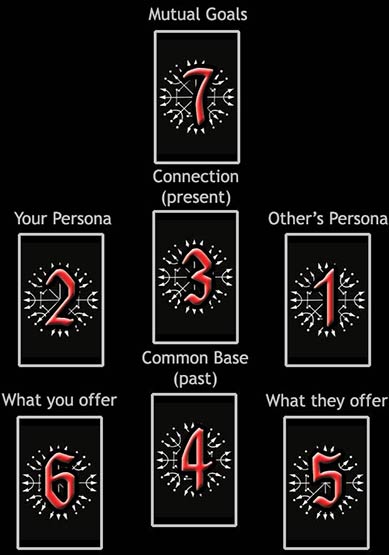
This relationship spread focuses more on the common ground of the relationship, with three cards in the middle column showing the common ground. The middle column essentially displays the past, present, and future of the relationship.
Card #4 stands for the common base of the relationship, which may be thought of as the past events which have shaped their characters, bringing them together. The current connection that binds them together is Card #3, indicating the values shared. Card #7 implies the common goals that would keep the pair together moving into the future.
The columns on either side show what each partner brings to the table. Remember, relationships need not be romantic, and the partners could even be groups rather than individuals. In this layout, the other person is on the left-hand side and the reader on the right.
Cards #1 & #2 indicate the separate personalities of each member of the relationship. These cards form a sort of bridge with the cards beneath them, #5 & #6, which show the qualities that each partner offers the other person, and thus to the relationship as a whole.
Your Relationship #2 Reading
Mutual Goals |
||
Your Qualities |
Connection (Present)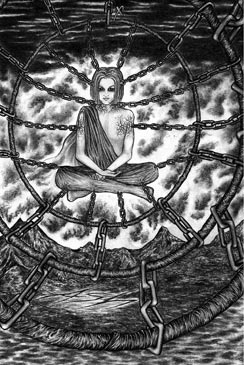 |
Others' Qualities |
What You Bring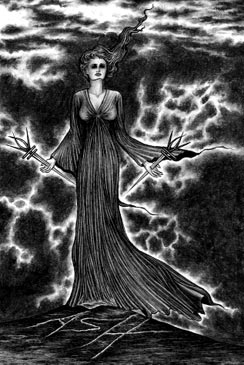 |
Common Base (Past) |
What They Bring  |
7: Mutual Goals
King of Spades
Standing your ground and being equal to the posturing of another. Not acquiescing or walking away when threatened or intimidated. Mutual respect offered and received when faced with the energy of another who would have otherwise assumed a superior role. Ability to bring a perceived threat down to a tolerable level through the use of clear communication. Acceptance of differences and similarities we have with others. This could indicate a person who will face any challenge head on and can back up their actions with appropriate words where necessary.
3: Connection
Imprisoned Instincts
Imprisoned Instincts is traditionally known as the Wheel of Fortune card in tarot. While it denotes sudden change for better or worse, nothing in life happens overnight. Sometimes, we are aware of signs of change and address them or we may overlook them and pay for consequences later.
As the seeker, this card indicates that methods of coping to circumstance surrounding us contribute to what happens in the future. Thus, taking responsibility for decisions we make empower us to create the future we wish for ourselves. Taking action is a choice; doing nothing to change our circumstances is also a choice.
As a situation, Imprisoned Instincts suggest a change and while the circumstances may be out of our control but how we deal with what happened/happens is. Perhaps it is time to assess at personal methods of coping and not the event itself.
4: Common Base
5 of Spades
Dilemma of action or inaction. Knowing when to make a stance and fight, and when it is more advisable to wait awhile in the hope conditions become more favourable. A choice of getting involved in someone else's battle or putting personal needs first. The need to weigh up all odds or to evaluate all variables before deciding a course of action.
2: Your Qualities
The Moon
Jahanam is where dreams are woven; this is where cats learn to fly and birds carry swords;
this is where the Lady Moonshine hides the face of the Sun God
so that we may see the truths hidden in the dark and drive ourselves insane.
1: Their Qualities
The Lovers
The Lovers card is a stage related to choice and decision-making. It represents how people of influence in our lives effect our choices, thus, it is a card that is also related to interpersonal relationships.
As the seeker, The Lovers card indicates a pivotal stage where the Seeker is faced with options but the challenge lies not in making the "Right" or "Wrong" decision. Rather is a reminder that the easy way out may not necessarily lead to a long-term solution.
As a situation, The Lovers card suggests weighing options not for hedonistic gain but long-term consequences.
6: What You Bring
2 of Spades
5: What They Bring
4 of Spades
The need for mental release or relaxation. The taking of a 'time out' from situations that may have been the main contributory factors leading to mental fatigue. Acceptance of limitations, as well as acknowledgment of personal weaknesses. The courage to go public and be open regarding mistakes or shortcomings.