Three-Card Spread
Difficulty: Very easy
This simplistic chronological spread can be used to shed light on the influences that have passed, current influences, and what is approaching in the near future. Not much explanation is necessary for this simple tarot spread.
Your Three-Card Reading
The Past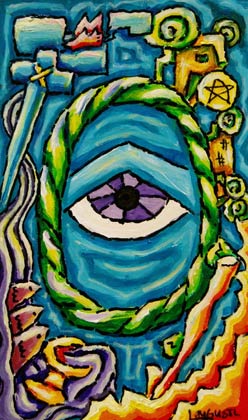 The World |
The Present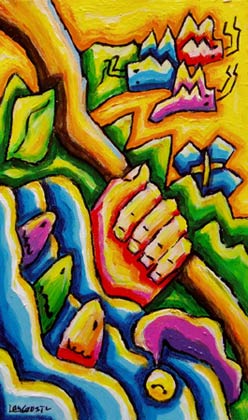 The Fool |
The Future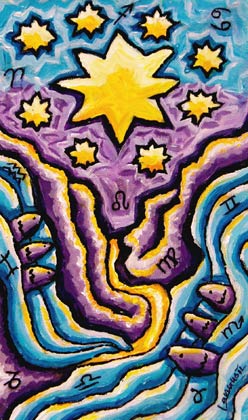 The Star |
The Past
The World
The eye is the same as that on the Magician's card, but the wish to develop is not portrayed any more. The oval wreath suggests the unification of polarities, as with the Lovers, but here the unification actually takes place.
The symbols for the four elements are collected around the oval and are reconcilably united together. The blue colour of the background symbolises consciousness and clarity.
The Present
The Fool
The bright colours symbolise many possibilities. The Fool is holding the pilgrim's staff in his hand. Water and fish indicate openness and vivacity. The butterflies also indicate different ideas and a joy of living.
The golden yellow background gives the scene energy of life. One can see the tip of the Fool's cap. The cross, or rather the handle of the sword in the background, gives an awareness of danger, which is lurking along the path the Fool is going to take.
The Future
The Star
Nine stars are pointing towards a goal. The violet colour in the picture illustrates the spiritual atmosphere, the blue water and the fish symbolise clarity, flow of energy and liveliness, the path is well lit and seems to become easier and the sky is clearing to a light blue.
The signs of the Zodiac point towards methods, which are occupied with one's own future, and act as deputy for all oracle techniques.