
Cross Spread
Difficulty: Easy
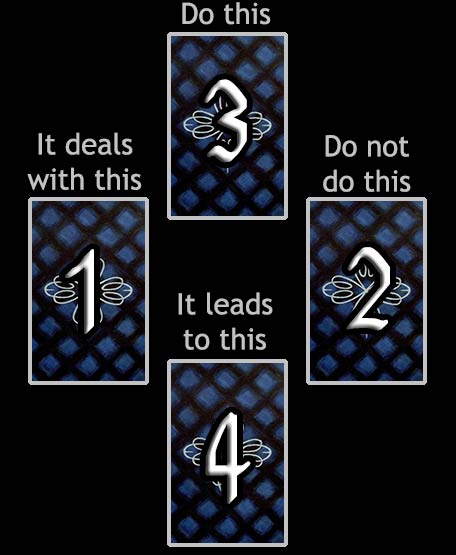
The Cross Spread is good for questions asking for advice. It can also be used to determine the meaning of a confusing card from a previous reading, or for that matter, to shed light on other points of confusion.
In questions asking advice, this tarot spread is self-explanatory. The main thing is to determine the difference between cards #2 and #3. #1 is the topic and #4 is the result.
In questions regarding confusion, such as: "What was the meaning of Card (X) in the last spread?" the main thing is also to determine the difference between cards #2 and #3. In this case, #2 will show what the card was not referring to, and Card #3 will show what was really meant. Card #1 is the topic and #4 represents the purpose it serves.
Your Cross Reading
DO This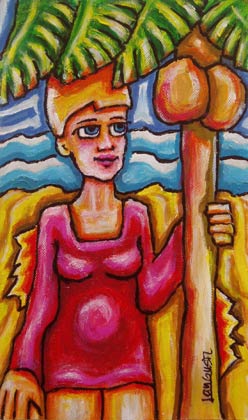 Princess of Wands |
||
It Deals with This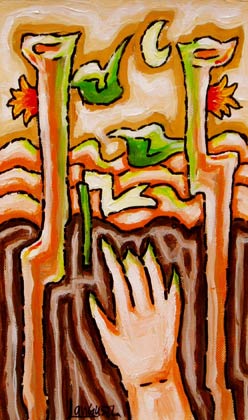 2 of Wands |
Do NOT Do This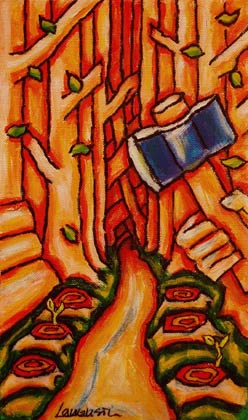 6 of Wands |
|
It Leads to This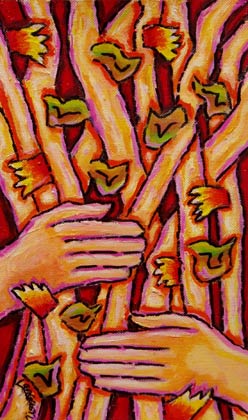 10 of Wands |
It Deals with This
2 of Wands
The picture shows coloured energy as well as a certain pallor. The brown colour suggests to us, stuck in the earth, that the right wand could help us.
The hand appears to be hesitant, the waning moon points to fear, the flag of parliament indicates false compromises. The waves in the middle show the situation's emotions.
Do NOT Do This
6 of Wands
Six trees have been felled in a forest, which couldn't be entered and be used, because the trees were growing in all directions. They are lying to the left-hand side of the path, which is now free to let in light, causing new leaves to sprout.
The wood from the forest has been used to melt down the iron for an axe, to turn a style and therefore to create a significant relationship between growth and order.
DO This
Princess of Wands
The princess is apparently in a holiday situation with palm-trees, a beach and the sea. Fire (sun) and water (sea) come together here. Heat and refreshment alternate. There are enough references to the erotic theme in the picture.
It Leads to This
10 of Wands
The intensity of the Nine of Wands diminishes in the Ten of Wands. The colours are paler; it seems more difficult to hold the wands together; at the same time the small flames are burning both hands, the leaves are beginning to wither.