The Golden Dawn or Thoth Method
Difficulty: Complicated
Note: Tarot decks that use reversed cards such as the Rider-Waite do not work well with this spread, which was designed to be read using elemental dignity.
The Golden Dawn spread is best suited for use with the bifrost Tarot and especially the Book of Thoth, as these decks are meant to be read a certain way with the court cards. Princes and queens represent actual men and women connected with the matter, while princesses generally represent ideas; thoughts or opinions, and knights represent arrival or departure of a matter depending on the direction faced.
In this tarot spread, particular attention should be paid to a card's exact position in relation to its neighbours. Whether the neighbour cards bear the same energy (suit) determines whether a card is considered well-dignified or ill-dignified. Opposite suits ill-dignify each other, while other suits are considered friendly. Tarot cards of the same suit or element strengthen each other.
As with other tarot spreads, it is important to count the cards' tendencies, such as whether there is a lot of one particular suit or number pattern. The patterns reveal special messages. Having several majors present indicates higher forces at work, several cups suggest strong emotions, etc.
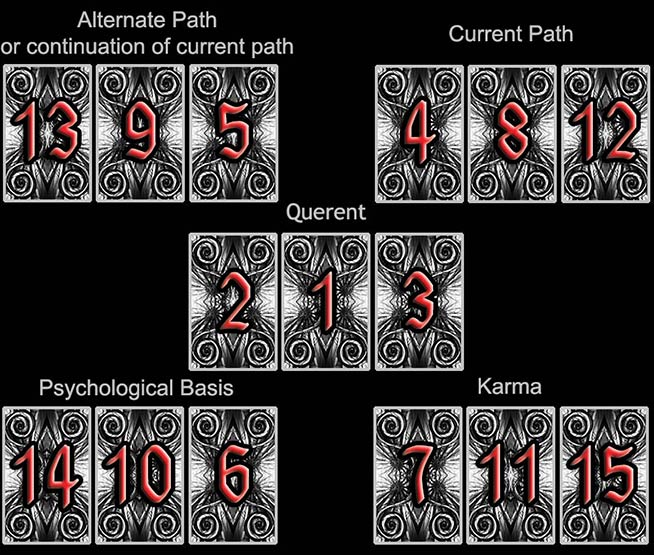
Card #1 represents the reader and the nature of the topic at hand.
Cards #2 & #3 are read in extension of #1 to further comprehend the nature of the topic.
The two sets of three tarot cards at the top of the spread represent chronological sets of events. The current path as it would unfold naturally is represented by cards #4, #8, & #12. The alternate path that could be taken is represented by cards #13, #9, & #5. However, if the reader gets the feeling these cards are telling them they go together, then the alternate path is to be considered an extension of the current path, and to be read chronologically in this order: #4, #8, #12, #13, #9, #5. Just keep in mind: this is only if the two paths seem particularly similar.
Cards #14, #10, & #6 shed light upon the psychological undertones of the current issue.
Cards #7, #11, & #15 represent the influences of karma and destiny beyond the reader's control. These cards suggest adapting to this, as fate.
Your Golden Dawn Reading
| The Alternate Path (or Extension of Current Path) |
Your Current Path |
|||||
 4 of Cups |
 Queen of Wands |
 Balance |
 King of Cups |
 10 of Wands |
 6 of Cups |
|
| The Querent | ||||||
 5 of Swords |
 Ace of Pentacles |
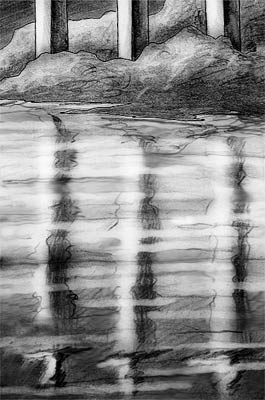 3 of Swords |
||||
| The Psychological Basis | Karma | |||||
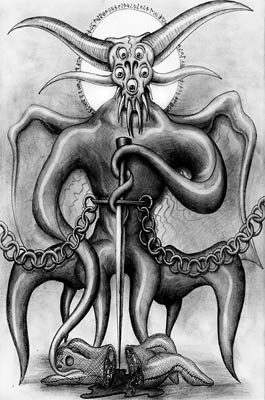
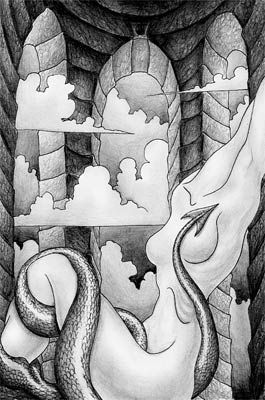 The Beast |
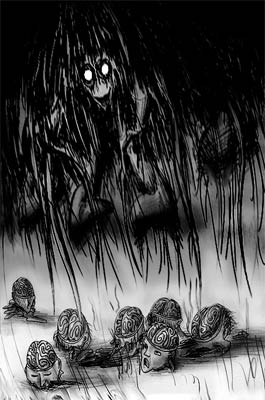 7 of Cups |
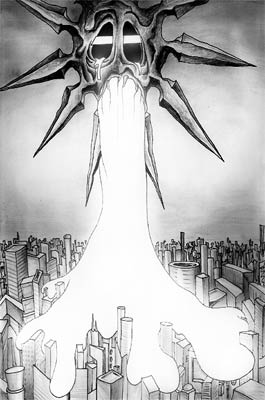 The Sun |
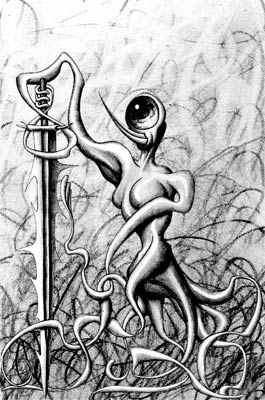 Page of Swords |
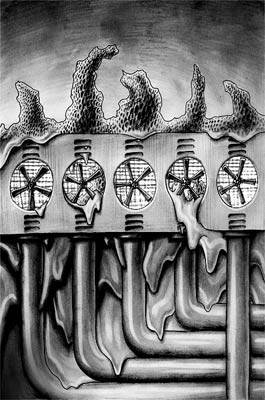 5 of Pentacles |
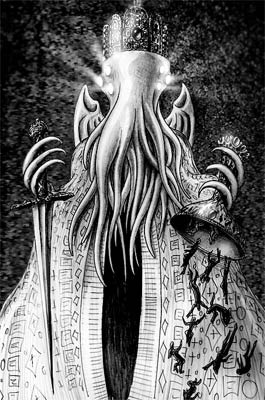
 King of Swords |
|
The Querent
cards represent the querent and the nature of the topic at hand. The first card (in the center of the spread) represents the very core of the matter, and the other two cards around it are added to it in order to further comprehend the nature of the topic.
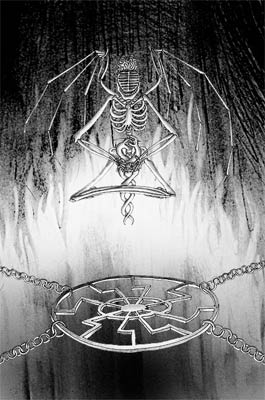
A fencing mask on a skeleton with a cadeceus over a black sun before fire. Refer to the symbolic meaning of each to find the answers you seek.
An homage to Bosch and Bruegel, and a card symbolic of victory to the well-armed and pain to the unprepared or unwilling to defend.
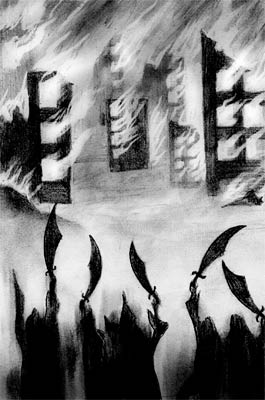
The Vikings were once the most feared force on the northern seas, now they are remembered by statues, Swedish death metal, and Antonio Banderas movies. Do what you will to ensure your name, but once you're gone you have no control over what will become of it.
Your Current Path
cards represent your current path as it would unfold naturally. These cards are read in chronological order from left to right.
An homage to H.P. Lovecraft and the culture that's grown around his works in the modern world. Charlemagne has been replaced by Cthulhu. Past insanity has been replaced with new insanity, but it's still madness all the same. Don't believe that just because it's changed means it's been fixed.
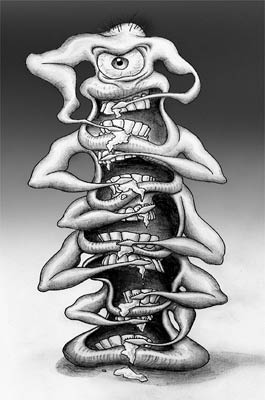
The average Tarowandian can spend up to 65% of its life span brushing its teeth. No matter what the fates bring, never forget to brush your teeth twice a day and floss. Also be sure to see a dentist twice a year to check for cavities, and brush your gums too to maintain a healthy pink colour. Red gums mean you may be susceptible to GINGIVITIS.
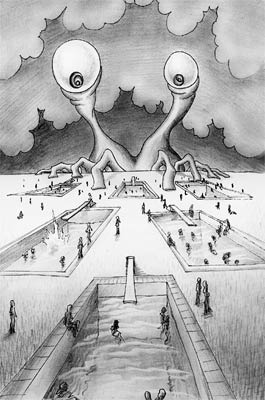
I have no clue what I was thinking on this one. No clue, but if this card comes into play, remember to watch the horizon.
The Alternate Path
cards represent the alternate path that you could choose to take in lieu of the Current Path. However, if the cards that come up seem to indicate that they go along with the Current Path, these three cards should be interpretted not as an Alternate Path, but as a chronological extension of the Current Path (also read from left to right).
When you order people to do something, be certain that your orders are clear.
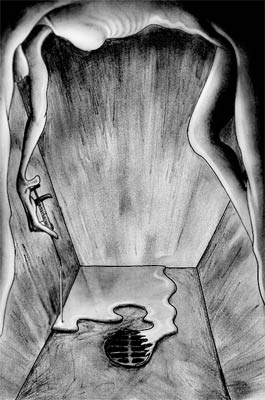
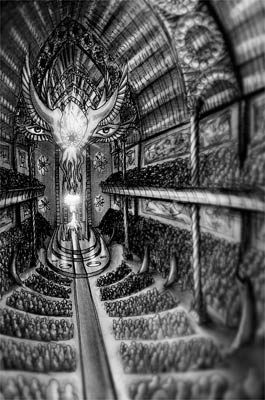
An homage to H.R. Giger's Alien Hieroglyphs and an insult to perspective. A wand that does nothing more than sap the life from you and squirt it down the drain.
AKA Justice in traditional Tarot.
Not the scales of a common religious moralist and no longer a cardinal virtue, but the raw, heartless justice of nature.
The Psychological Basis
cards shed light upon the psychological undertones of the current problem.
3:00 – Card 7
AKA Judgement or The Angel in traditional Tarot. Female, Air, Aries.
Birth, gain and success. To eat the apple and learn mastery of life and death. To nurse and grow strong. To win. These are all steps toward the goal but not the goal itself, to mistake the method for the achievement will leave one halfway there.
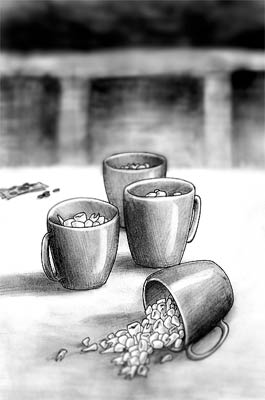
'It's hard to fill a cup that's already full'. –James Cameron, Avatar. What fills your cup? If you like what's there don't let the nightmares in. But if you want to learn more, you have to spill your past preconceptions.
Damn bright thing always vomiting heat and blinding light onto the populous. The artist of this deck isn't a fan.
Karma
These cards represent the influences of karma and destiny that are beyond your control. They suggest adapting to this fate.
Chaos is dangerous to both belligerents. If you have all the arms and all the thorns in the world, you're just as much a danger to yourself if you don't keep track of them.
Air conditioning is not a luxury, it's one of the most important things humankind ever invented. Comfort too is not to be taken lightly, if you aren't comfortable you can't enjoy what's before you, and if you can't enjoy what you've got, what's the point in living?
The coronation of the nuclear bomb. It's the sword that can annihilate a city, a few of them can end the world. It's a weapon so deadly that its mere existence changed the way mankind thinks of war. It's the point at which humankind's means finally exceeded its goals. 1945 was the end of one world and the birth of a new.